Happy Lettering Review for Boutique Apparel
As an experienced embroidery designer who spends hours curating digital assets for boutique brands, I am constantly on the lookout for designs that bridge the gap between professional finish and genuine warmth. Recently, I came across a product titled Happy Lettering on Creative Fabrica. While browsing through their vast library of machine embroidery designs, this particular piece caught my eye immediately. It falls under the Family Quotes category, but its potential extends far beyond just sentimental wall hangings. For those of us building custom apparel lines, sweatshirt collections, or Etsy shops, finding a design that feels premium yet accessible is crucial.
The first impression of Happy Lettering is one of pure joy. Visually, it exudes a playful and modern personality without leaning too heavily into childish aesthetics. The lettering style suggests a casual, trendy vibe that fits perfectly with current fashion movements favoring comfort and positive messaging. When I imagine placing this design on a neutral beige sweatshirt or a soft pastel hoodie, the visual mood shifts from simple clothing to a statement piece. It possesses a decorative strength that elevates the garment, making it feel like a thoughtful gift rather than mass-produced merchandise. Whether you are aiming for a feminine touch, a rustic feel, or a bold statement, this embroidery file offers a versatile foundation for your creative vision.
Applying Happy Lettering to Sweatshirts and Hoodies
For small clothing brands and boutique owners, the sweatshirt remains a cornerstone of any collection. I have been analyzing how Happy Lettering performs specifically in the context of sweatshirt embroidery. The design's structure seems ideal for chest placement on a classic crewneck or a zip-up hoodie. On a dark garment, using high-contrast thread colors could make the text pop, creating a striking visual contrast that draws the eye. Conversely, on lighter fabrics, a tonal thread choice would offer a subtle, sophisticated texture that appeals to customers looking for understated luxury.
I also envision this design as a sleeve accent. A smaller iteration of the lettering on the upper arm can add a unique detail that distinguishes a basic hoodie from a branded piece. For larger garments, such as oversized hoodies, the back panel offers a canvas where Happy Lettering can be scaled up to create a focal point. This approach works exceptionally well for lifestyle product photos, allowing the wearer to showcase the design prominently in social media graphics. When used on cozy seasonal outfits, the happy sentiment complements the warmth of the fabric, enhancing the overall emotional connection the customer feels when wearing the item.
Expanding to Tote Bags and Denim Jackets
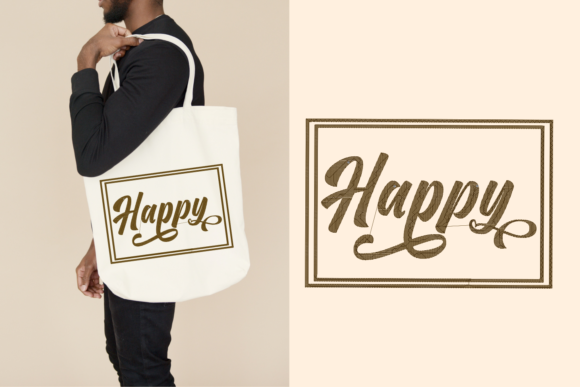
Beyond standard apparel, this machine embroidery design proves adaptable for various accessories. Tote bag design applications are particularly promising. The sturdy cotton canvas often used for totes provides a stable surface for stitching, allowing the details of Happy Lettering to shine without distortion. It serves as excellent boutique merchandise, adding value to a shopping experience or serving as a promotional tool for a handmade business owner.
Denim jackets present another exciting opportunity. The rugged texture of denim contrasts beautifully with the smooth flow of embroidered lettering. Stitching Happy Lettering on the back of a vintage-style denim jacket can transform a thrifted find into a custom, high-value piece. This versatility makes the design a strong candidate for commercial embroidery projects where variety is key to maintaining customer interest.
Strategic Considerations for Placement and Fabric
While the potential is high, a professional designer knows that success lies in execution. There are specific areas where Happy Lettering requires careful consideration. Small chest placement on fitted garments can sometimes lead to crowding if the design is not sized correctly relative to the wearer's frame. Additionally, dense stitch areas might cause puckering if the stabilizer choice is inadequate, especially on stretchy fleece materials common in modern activewear and loungewear.
Fleece and ribbed fabric present unique challenges due to their elasticity. When embroidering on these surfaces, the tension of the stitches must be balanced to prevent the fabric from warping around the design. Dark garments require a high-quality underlay and potentially a cutaway stabilizer to support the weight of the threads and ensure the lettering sits flat against the material. Curved surfaces, such as the shoulders of a t-shirt or the crown of a cap, demand precise hoop size selection and possibly a curved hoop attachment to maintain the integrity of the lettering shape.
Tiny lettering details can sometimes get lost in the texture of thick fabrics or become illegible if the stitch density is too low. Therefore, inspecting the stitch density of the digital embroidery file before production is vital. If the design includes fine lines, ensuring they are rendered clearly will prevent a blurry appearance on the finished product.
Impact on Brand Identity and Value
In the world of digital sellers and Etsy listings, the quality of the embroidery directly influences buyer trust and product recognition. A well-executed Happy Lettering design signals professionalism and attention to detail. It contributes to a cohesive brand identity, suggesting that the creator cares about the tactile experience of the customer. Visual consistency across a product line helps in building a loyal following, as customers begin to associate the quality of the embroidery with the reliability of the shop.
When showcasing finished products in printable mockups or real-life photography, the clarity of the stitching enhances the perceived value. Customers are often willing to pay a premium for items that look professionally made. The emotional resonance of a "happy" quote, combined with high-quality craftsmanship, fosters customer engagement and encourages repeat purchases. It transforms a simple piece of clothing into a wearable expression of personality.
Practical Designer Notes for Production
Before committing to a full production run, I strongly advise testing the Happy Lettering file on scrap fabric that matches your intended garment. This step allows you to verify thread color contrast and ensure the design looks as vibrant on the final material as it does on the screen. Check your stabilizer choice carefully; different fabrics require different levels of support to prevent shifting or tearing during the stitching process.
Confirm the hoop size requirements by reviewing the Creative Fabrica product details. Using the correct hoop ensures the design stays within the intended area and prevents unnecessary trimming or re-hooping. Inspect the stitch density to see if adjustments are needed for specific thread types or fabric weights. Comparing placement options on a mannequin or actual garment can reveal how the design interacts with the natural drape of the cloth.
Finally, always check the licensing terms provided on the Creative Fabrica page before selling finished apparel. Understanding the commercial embroidery rights ensures you can legally use the design in your small shop product line without infringement issues. By taking these precautions, you ensure that your Happy Lettering projects result in beautiful, durable, and market-ready items.
This review highlights why Happy Lettering is a valuable addition to any embroidery file collection. Its blend of charm and versatility makes it suitable for a wide range of applications, from cozy home decor to trendy streetwear. For creative entrepreneurs looking to expand their offerings, this design offers a reliable path to creating meaningful, high-quality handmade products that resonate with buyers seeking positivity and style.